What makes lithium ion batteries require a special charger
Why Do Lithium-Ion Batteries Need a Special Charger?
Lithium-ion batteries, the powerhouse behind devices like smartphones, cameras, and flashlights, were once infamous for requiring special chargers. These chargers were designed to handle the intricate charging protocols that lithium-ion batteries demand for safe and efficient operation. But today, the game has changed. Many lithium-ion batteries, including rechargeable lithium batteries for flashlights, USB rechargeable batteries for cameras, and wireless USB rechargeable batteries, no longer need a special charger. A simple smartphone USB charger is often enough.
So, what changed? Why were special chargers necessary in the past, and why are regular USB chargers now sufficient for many lithium-ion batteries? Let’s break it down.

Why Special Chargers Were Once Essential
In the early days of lithium-ion battery technology, these batteries had certain characteristics that made them more sensitive and prone to damage than other battery types, such as nickel-cadmium or alkaline batteries. As a result, charging lithium-ion batteries required precision to avoid safety risks and maximize their lifespan.
-
Precise Voltage Control
Lithium-ion batteries have a strict voltage limit, typically around 4.2 volts per cell. If a charger exceeded this voltage, it could cause the battery to overheat, swell, or even catch fire. Special chargers were designed with precise voltage regulation to ensure that the battery never exceeded its safe limit. -
Current Regulation
Lithium-ion batteries also require a specific current to charge properly. Charging with too much current can cause the battery to overheat and degrade faster. Special chargers had to regulate the current, ensuring a safe and efficient charge that wouldn’t compromise the battery’s performance. -
Temperature Monitoring
Overheating is a major risk for lithium-ion batteries. Chargers had built-in temperature sensors to monitor the battery’s temperature during the charging process, adjusting the current or voltage to keep the battery within safe thermal limits. -
Overcharge Protection
One of the most important features of special chargers was the ability to stop charging once the battery was fully charged. Overcharging can lead to permanent damage, reduced capacity, and shortened battery life. Special chargers had mechanisms to detect when a battery was full and would automatically stop charging to prevent damage.
The Shift: USB Chargers to the Rescue
So, if lithium-ion batteries are so delicate, why is it that today’s regular USB chargers can safely charge rechargeable lithium batteries for flashlights, USB rechargeable batteries for cameras, and wireless USB rechargeable batteries? The answer lies in advancements in both the design of lithium-ion batteries and the chargers themselves.
1. Smart Charging Circuits
Modern lithium-ion batteries are equipped with built-in Battery Management Systems (BMS), which are essentially tiny computer chips that manage the charging process internally. These smart systems can control voltage, current, and temperature, ensuring the battery is charged safely without the need for a special charger. For example, with USB rechargeable batteries for cameras, the camera itself has an internal charging circuit that regulates the charging process. The BMS takes over, ensuring the battery receives the right amount of power and prevents overcharging.
2. USB Charging Protocols Have Evolved
The development of USB charging standards, such as USB-C and USB Power Delivery (PD), has also played a role in making it easier to charge lithium-ion batteries using standard chargers. These standards offer greater power output and smarter charging features than older USB chargers. USB-C, for instance, supports faster charging and more efficient energy transfer, which is perfect for devices like wireless USB rechargeable batteries and rechargeable lithium batteries for flashlights. These devices can now be safely charged with regular USB chargers, as the USB charger simply delivers the necessary power, and the battery’s internal system handles the specifics of voltage, current, and temperature.
3. Safety Features Built Into USB Chargers
Modern USB chargers, especially those that support fast charging protocols like USB-PD, are designed to work seamlessly with lithium-ion batteries. These chargers have built-in protections, such as overcurrent, overvoltage, and temperature protection. This makes it possible for USB rechargeable batteries for cameras and similar devices to charge safely without needing a special charger. The charger itself adjusts its power output to ensure the battery is not damaged during the charging process.
4. Universal Compatibility
Today, many devices use standard USB chargers to power a wide variety of electronics. Whether it’s your smartphone, wireless earbuds, or even your flashlight, the USB rechargeable batteries for flashlights and other devices now work perfectly with these universal chargers. Thanks to universal compatibility, a single charger can power multiple devices, adding convenience and reducing the number of cords and adapters you need.
Why Regular USB Chargers Are Enough Now
1. Ease of Use
One of the main benefits of this shift is the sheer convenience. You no longer need to carry around different chargers for different devices. Whether you’re charging USB rechargeable batteries for cameras, wireless USB rechargeable batteries, or your phone, a simple USB charger is all you need. This universal approach makes life easier for consumers who are always on the go.
2. Widespread Availability
USB chargers are now ubiquitous, found everywhere from coffee shops to airports. This widespread availability means you can charge your device wherever you are, without worrying about bringing a specific charger. Whether you’re on vacation, at work, or at home, you’ll find a USB charger that works for your lithium-ion-powered devices.
3. Efficiency
With the development of modern USB standards, like USB-C and Power Delivery, charging times are faster than ever before. Devices that use wireless USB rechargeable batteries and rechargeable lithium batteries for flashlights benefit from the improved efficiency of these new charging technologies. Fast charging and power delivery systems deliver a quicker and more efficient charge without compromising the safety of the battery.
4. Cost-Effectiveness
Since USB chargers are universal, they are also more cost-effective. You don’t need to buy multiple, specialized chargers for different devices. The flexibility of using a single USB charger for multiple devices makes it a more affordable and sustainable solution for consumers.
HYE: Leading the Charge in Lithium-Ion Battery Innovation
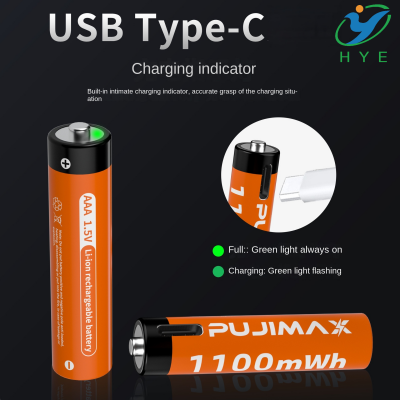
At HYE, we’ve been leading the way in the production and development of rechargeable lithium batteries for flashlights, USB rechargeable batteries for cameras, and wireless USB rechargeable batteries. Our batteries are designed to be compatible with modern USB chargers, featuring built-in Battery Management Systems (BMS) for optimal performance and safety.
We understand the importance of convenience, safety, and efficiency in today’s fast-paced world. That’s why we’ve worked hard to ensure that our batteries can be charged with standard USB chargers, so you don’t need to worry about carrying around extra equipment. Whether you’re powering up your flashlight, camera, or another device, HYE’s batteries are designed to make your life easier, while also providing long-lasting, reliable performance.
Conclusion
In the past, rechargeable lithium batteries for flashlights, USB rechargeable batteries for cameras, and wireless USB rechargeable batteries required special chargers due to the delicate nature of lithium-ion technology. These chargers were designed to manage voltage, current, and temperature to ensure safety and efficiency. However, thanks to advances in battery design, smarter charging circuits, and modern USB technologies, it’s no longer necessary to use special chargers for many lithium-ion-powered devices. Today, a regular USB charger can handle the job, providing a convenient, safe, and efficient charging experience.
At HYE, we continue to push the boundaries of lithium-ion battery technology, ensuring that our products meet the highest standards of quality and safety while being compatible with the modern charging solutions that consumers rely on every day. With our USB rechargeable batteries for cameras and other lithium-ion products, you can enjoy fast, safe, and convenient charging—no special charger required!
How long does it take to charge a Ryobi USB lithium battery
What is a USB rechargeable lithium battery