What are AA lithium battery used for
1. HYE AA Rechargeable Lithium Battery's Core Technology Analysis
The AA rechargeable lithium battery stands as a modern portable energy solution, primarily featuring lithium-ion migration mechanisms. This battery uses lithium cobalt oxide or lithium iron phosphate as the positive material, combined with graphite as the negative, enabling energy storage and release through the reciprocal movement of lithium ions between the electrodes. Compared to traditional nickel-metal hydride (NiMH) batteries, the energy density of the AA rechargeable lithium battery can reach 200-265Wh/kg, allowing it to store more energy in the same volume. Products like smart home devices and wireless peripherals favor AA rechargeable lithium batteries because of their superior energy-to-weight ratio. Additionally, its 3.7V working voltage is significantly higher than the 1.2V of NiMH batteries, offering stronger power support for devices such as IoT sensors.
2. Application of AA Rechargeable Lithium Batteries in Smart Home Scenarios
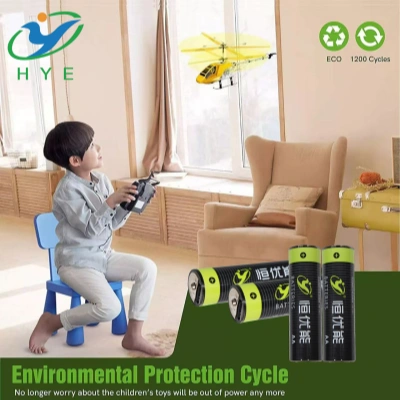
In the smart home ecosystem, the AA rechargeable lithium battery plays an indispensable role. Take smart door locks as an example: two AA rechargeable lithium batteries can support the device for 6-12 months, far exceeding the battery life of alkaline batteries. Environmental monitoring devices, such as temperature and humidity sensors, benefit from the ultra-low power consumption of AA rechargeable lithium batteries, whose self-discharge rate (2-3% per month) is ideal for these applications. Notably, next-generation smart home devices commonly incorporate energy recovery technologies, and when used with AA rechargeable lithium batteries, they can extend the device’s operating time further through solar or kinetic energy recovery. Market research indicates that 85% of smart home device manufacturers have already chosen AA rechargeable lithium batteries as their preferred power source.
3. Performance Advantages of AA Rechargeable Lithium Batteries in Wireless Peripherals
Professional-grade wireless peripherals require strict power specifications, and this is where AA rechargeable lithium batteries excel. For example, a gaming mouse powered by AA rechargeable lithium batteries can achieve a 1ms response time and continuous usage for up to 80 hours. In keyboard applications, backlit mechanical keyboards typically require two AA rechargeable lithium batteries. Their constant voltage output ensures that the backlight remains stable without flickering. Moreover, some high-end wireless headphones are now incorporating replaceable AA rechargeable lithium battery designs, where users can achieve 8 hours of battery life with just a 30-minute fast charge. This design not only addresses the issue of battery aging but also aligns with environmental sustainability goals.
4. Special Requirements for Portable Medical Gear Powered by AA Rechargeable Lithium Batteries
Portable medical gear places high demands on the safety of power sources, and AA rechargeable lithium batteries for medical use must comply with ISO13485 certifications. These batteries feature specially formulated electrolytes, ensuring they do not leak in extreme conditions. For example, hearing aids equipped with dedicated AA rechargeable lithium batteries can extend their operational life to 72 hours without changing size. Devices like blood glucose meters also benefit from the stable voltage platform provided by AA rechargeable lithium batteries, ensuring measurement errors remain below 0.5%. New developments in medical-grade AA rechargeable lithium batteries include integrated NTC temperature protection chips, which automatically disconnect the circuit if abnormal temperature rise is detected.
5. Power Solutions for Industrial IoT Sensors
In the industrial IoT sector, AA rechargeable lithium batteries must withstand harsh environmental conditions. Industrial-grade batteries specifically designed for IoT sensors can operate in temperature ranges from -40°C to 85°C. For example, in smart agriculture, soil sensors deployed in the field use AA rechargeable lithium batteries combined with energy harvesting devices to achieve maintenance-free operation for 3-5 years. In smart warehousing systems, thousands of RFID tags rely on AA rechargeable lithium batteries for continuous power. Specialized low self-discharge models can maintain over 90% of their charge even after two years of storage, making them an ideal solution for IoT sensor deployments.
6. Lifecycle and Economic Analysis of AA Rechargeable Lithium Batteries
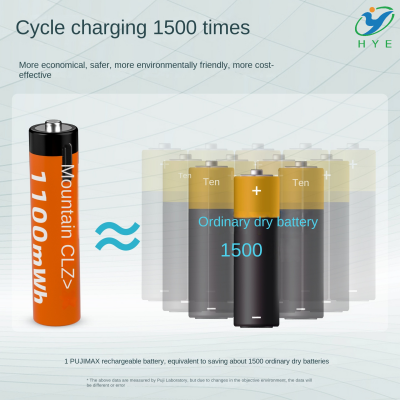
From a lifecycle cost perspective, AA rechargeable lithium batteries demonstrate clear advantages. High-quality products can undergo 500-1000 complete charge and discharge cycles. If charged once a week, the service life can extend to 5-10 years. Compared to single-use batteries, AA rechargeable lithium batteries can save more than 80% of energy costs in smart home devices. For high-frequency applications like wireless peripherals, some manufacturers offer commercial-grade products capable of 2000 charge cycles. Proper charging practices (avoiding overcharging or deep discharge) can extend battery life by 30%, so it is recommended to use a smart charger.
7. Safety Features and Protection Mechanisms of AA Rechargeable Lithium Batteries
Safety is always a primary consideration in the design of AA rechargeable lithium batteries. Modern products generally feature a triple protection mechanism: PTC overcurrent protection, CID vent valve, and PCB protection board. When a short circuit occurs in smart home devices, the protection circuit can cut off the current in milliseconds. For portable medical gear, some products are designed with anti-swallowing mechanisms, releasing harmless neutralizing agents if the battery is ingested. AA rechargeable lithium batteries that have passed the UN38.3 certification can be safely transported by air, which facilitates the global deployment of IoT devices.
8. Environmental and Sustainability Contributions of AA Rechargeable Lithium Batteries
In terms of environmental metrics, AA rechargeable lithium batteries stand out. Each battery can replace up to 300 single-use batteries, significantly reducing heavy metal pollution. The EU RoHS certification shows that modern AA rechargeable lithium batteries contain less than 0.004% lead and zero mercury. The widespread adoption of smart home devices contributes to reducing several tons of battery waste annually. Furthermore, leading manufacturers have established complete recycling systems, ensuring that up to 95% of the materials in the batteries can be reused, including lithium, cobalt, and nickel recovery and purification.
9. Purchasing Guide and Technical Parameters for AA Rechargeable Lithium Batteries
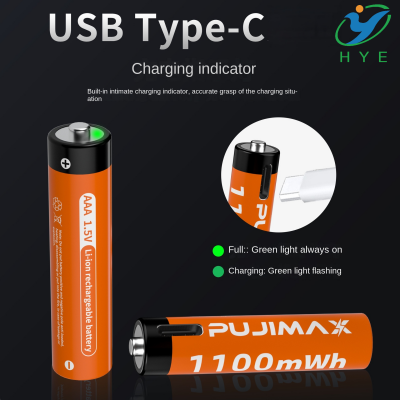
Consumers should pay attention to several key technical specifications when purchasing AA rechargeable lithium batteries. In terms of capacity, mainstream products range from 600mAh to 1200mAh, with an 800mAh model recommended for smart home devices. The voltage characteristics should reach 4.2V when fully charged, and the working voltage should maintain around 3.7V. For wireless peripherals, users should pay special attention to the discharge curve to ensure stability. IoT sensor users should focus on the self-discharge rate, with high-quality products having an annual self-discharge rate of no more than 15%. Certifications such as CE and UL are basic requirements, while medical devices also require FDA certification.
10. Future Technology Trends in AA Rechargeable Lithium Batteries
The technology of AA rechargeable lithium batteries continues to evolve. Solid-state battery technology is expected to be commercialized in the next 3-5 years, promising a 50% increase in energy density. Smart home devices will benefit from wireless charging technologies, achieving true maintenance-free operation. In the IoT sector, the combination of energy harvesting technologies with AA rechargeable lithium batteries will create new application scenarios. Medical-grade products are developing biodegradable casings to further enhance environmental sustainability. With the advancement of materials science, AA rechargeable lithium batteries will continue to lead the revolution in portable energy solutions.
11. Expert Usage and Maintenance Advice for AA Rechargeable Lithium Batteries
To maximize the performance of AA rechargeable lithium batteries, proper usage habits are essential. Smart home device users should charge their batteries promptly when the device indicates low power to avoid deep discharge. Wireless peripheral users are advised to use smart chargers, which automatically identify the battery’s status and optimize the charging curve. Portable medical gear batteries should be stored at room temperature, as extreme temperatures can impact performance. IoT sensor users should fully charge and discharge their AA rechargeable lithium batteries before deployment. Regularly cleaning the battery contacts is an effective way to extend battery life.
12. Market Leading Brands and Product Comparisons
The AA rechargeable lithium battery market has several leading brands. In the smart home sector, HYE is known for its 2000-cycle lifespan. Wireless peripherals users prefer Tenavolts’ 1.5V constant-voltage lithium batteries. In the medical-grade market, Panasonic’s Energizer Lithium series is a dominant player. IoT device manufacturers typically use Tadiran’s industrial-grade products, which have the broadest temperature tolerance. Consumers should consider factors such as capacity, cycle life, temperature adaptability, and application-specific needs when selecting the best AA rechargeable lithium battery.
What AA batteries actually last the longest
Do aaa rechargeable batteries exist